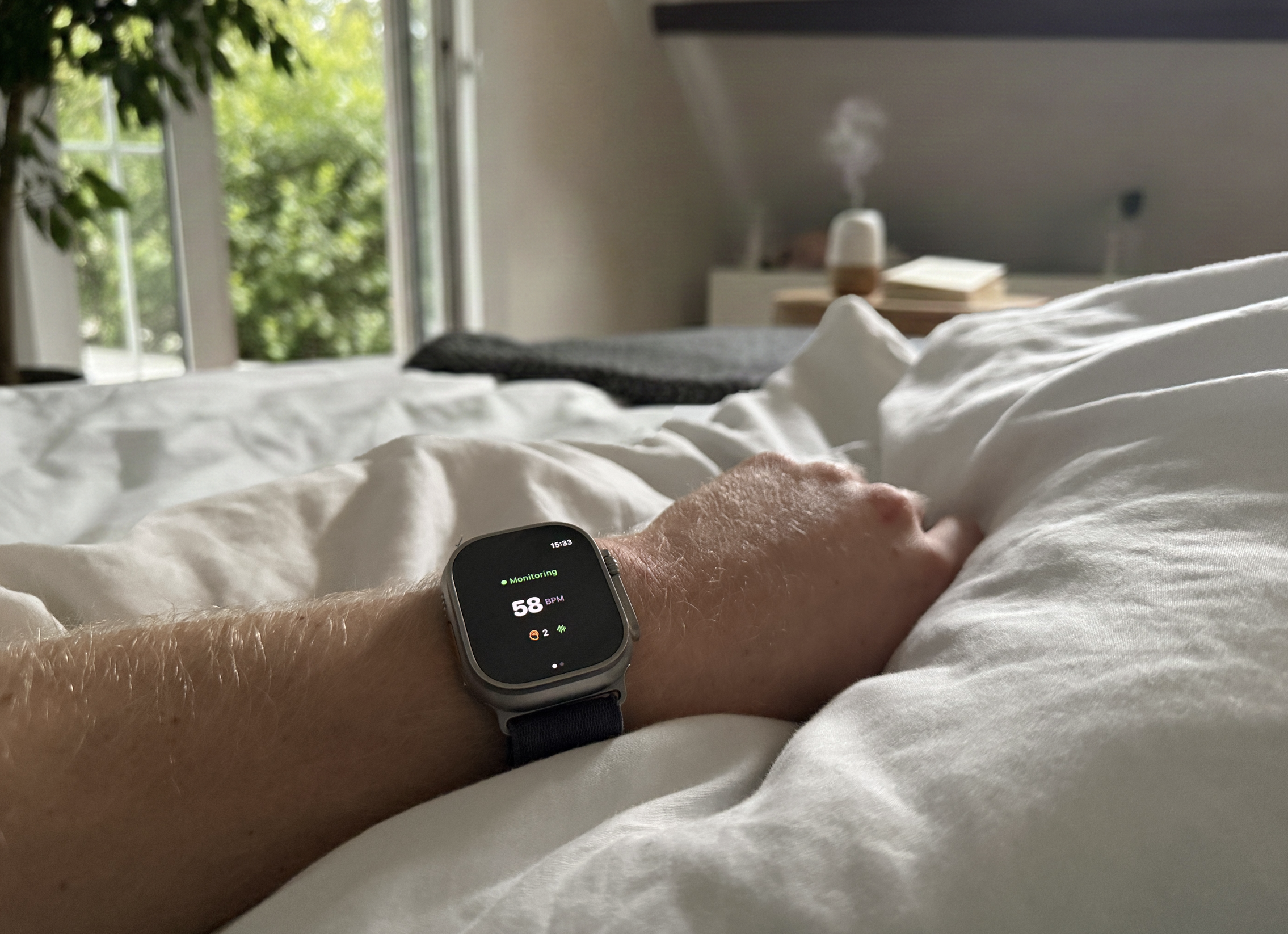
SleepSafe app displaying real-time heart rate monitoring using physiological signals to detect and prevent nightmares.
For millions of people worldwide, bedtime isn't a peaceful retreat - it's a nightly confrontation with terror. Nightmares and night terrors can turn sleep into something to be dreaded rather than welcomed, affecting everything from daily performance to long-term mental health.
Now, a small team of developers and sleep researchers believes they've found a way to help: an app that watches while you sleep, detecting the physiological signs of an impending nightmare and gently intervening before it fully takes hold.
SleepSafe, available for Apple Watch and iPhone, represents the culmination of more than two years of development and real-world testing with users experiencing chronic nightmares and night terrors. The results, according to both the developers and early users, have been remarkable.
The Science Behind the Sleep
The premise is deceptively simple: when a nightmare begins, the body responds. Heart rate spikes. Movement patterns change. Breathing becomes irregular. For someone experiencing a night terror - a more severe form of sleep disruption - these physiological changes can be dramatic.
"We spent the first year just gathering data," explains Oliver Hebnes, the app's creator. "We needed to understand what nightmare onset actually looks like from a physiological perspective, and how we could reliably detect it using consumer wearables."
The team worked with test users who experienced regular night terrors and nightmares, collecting hundreds of hours of sleep data. They built what Hebnes calls "a robust framework leaning on both stress detection and audio processing"-algorithms that could distinguish between normal REM sleep and the beginnings of a nightmare.
A Gentle Intervention
Once the app detects that a nightmare is beginning, it delivers a subtle haptic pulse through the Apple Watch - a gentle vibration designed to shift the sleeper's state without fully waking them.
"The goal isn't to wake you up," Hebnes emphasizes. "It's to introduce just enough stimulus to redirect the dream, to break the nightmare cycle before it fully develops."
The approach builds on established research in nightmare intervention. Sleep researchers have long known that external stimuli - sounds, lights, even gentle physical touch - can influence dream content without causing full awakening. The challenge has been delivering that stimulus at precisely the right moment.
That's where machine learning enters the picture. SleepSafe's algorithms, trained on real user data, can detect the early physiological signatures of nightmare onset - catching that critical window where intervention is most effective.
Real-World Results
After a year of development and data collection, the team spent another year learning from the community - refining the algorithms, adjusting intervention timing, and adding features requested by users.
The feedback, according to Hebnes, has been "very positive." Users report not just fewer nightmares, but improved overall sleep quality and, crucially, a reduction in the anxiety many people feel about going to bed.
The app also offers flexibility. While the default approach is to gently redirect dreams without waking the user, some people - particularly those working with therapists on specific treatment protocols - prefer to be fully awakened. SleepSafe supports both approaches.
"We're not trying to replace therapy or medical treatment," Hebnes is quick to clarify. "This is a tool that can complement existing treatment. Some users are working with therapists who specifically recommended trying it as part of a broader treatment plan."
The Lifestyle Connection
In analyzing user data, the team discovered something else: many users experienced significant improvements through lifestyle adjustments alone.
"We saw patterns in the data that surprised us," Hebnes explains. "Simple changes - adjusting room temperature, modifying evening routines, managing stress - made a measurable difference for many users."
The team shared their findings in a detailed Reddit post, highlighting research-backed strategies that users could implement immediately. For some, these basic sleep hygiene improvements were enough to significantly reduce nightmare frequency.
Privacy in the Bedroom
Given the intimate nature of sleep monitoring, privacy was a paramount concern in SleepSafe's design. All data processing happens on-device using Apple's CoreML framework. Sleep data never leaves the user's devices.
"Sleep is intensely personal," Hebnes notes. "People need to trust that what happens while they're unconscious stays private. That was non-negotiable for us."
The Road Ahead
SleepSafe joins a growing category of health technologies that aim to improve quality of life through passive monitoring and intervention. As wearable sensors become more sophisticated and machine learning models more refined, the potential applications extend far beyond nightmare detection.
For now, though, the team remains focused on their core mission: helping people who dread bedtime find peace again.
"Every message we get from someone saying they're sleeping through the night for the first time in years - that's what keeps us going," Hebnes reflects. "This started as a technical challenge, but it's become something much more meaningful."
SleepSafe is available now on the App Store for iPhone and Apple Watch. The app is free to download, with the team committed to keeping core nightmare detection features accessible to everyone who needs them.
For those who've spent years dreading the moment their head hits the pillow, the promise is simple: tonight doesn't have to be like every other night. Sometimes, all it takes is a gentle vibration on your wrist to break the cycle.
If you experience chronic nightmares or night terrors, consult with a healthcare provider. SleepSafe is designed as a complementary tool and is not a replacement for professional medical treatment.