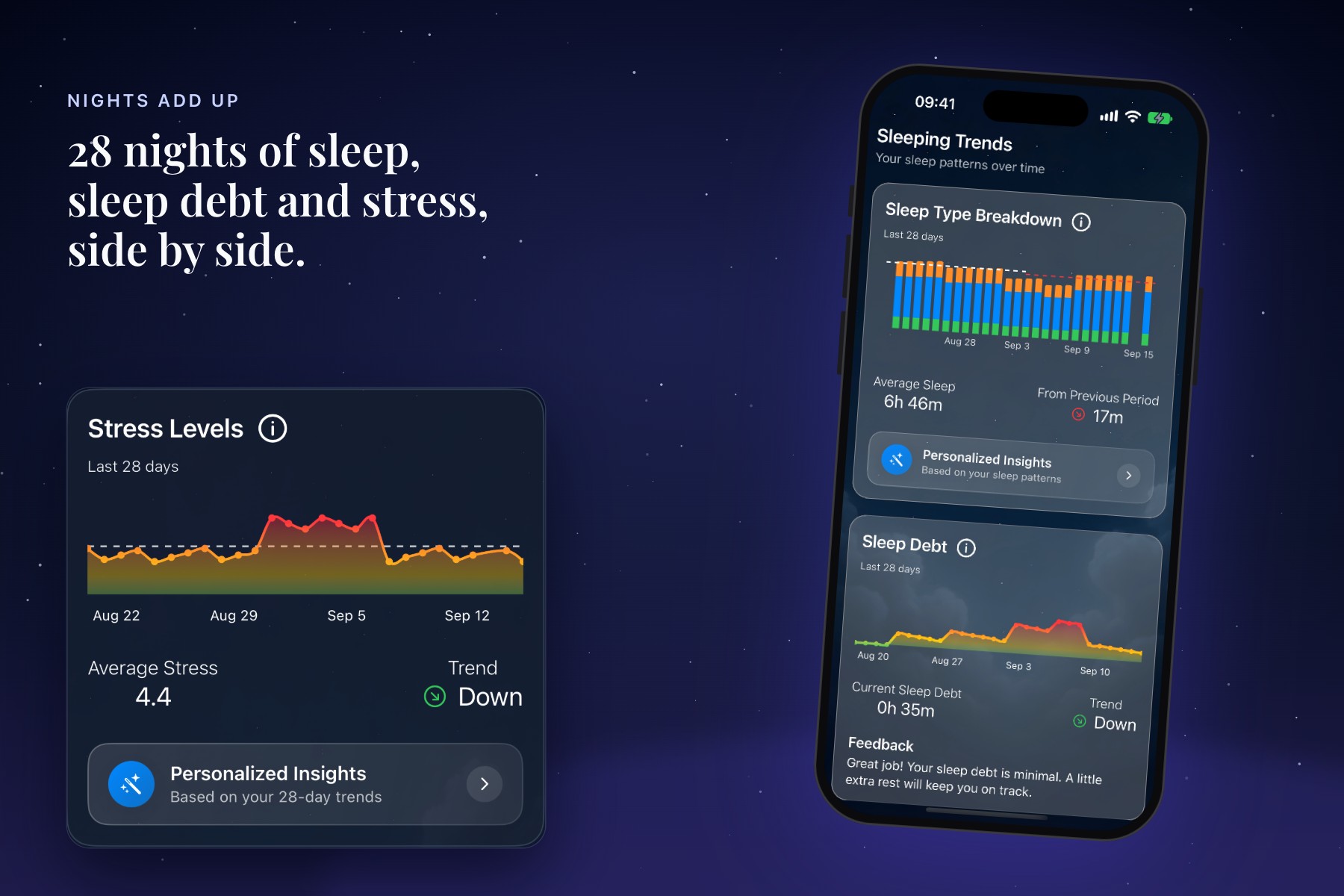
SleepSafe Trends: a Stress Levels card for the last 28 days beside an iPhone showing Sleep Type Breakdown and Sleep Debt.
Nearly everyone knows the feeling. You wake with your heart pounding and the dream still vivid, and it takes a moment to remember that you are safe in bed.
For most people, that happens now and then. In a study of nearly 14,000 adults in Finland, 45.5 percent had had an occasional nightmare in the previous month (Sandman et al., Sleep, 2015).
For some, though, the nightmares stop being occasional. They come back again and again, and they begin to shape the nights and the days around them. That is when bad dreams can become nightmare disorder.
Where the line is
Nightmare disorder is a pattern of repeated, frightening and vivid dreams that cause significant distress or get in the way of daily life (Cleveland Clinic).
How often they come is part of the picture. Less than one a week is described as mild, one or more a week as moderate, and nearly every night as severe. But frequency is not the whole test. What matters just as much is what the nightmares take from you: the dread at bedtime, the broken sleep, the heavy mornings.
How common it is
The American Academy of Sleep Medicine estimates that nightmare disorder affects about 4 percent of adults (Morgenthaler et al., Journal of Clinical Sleep Medicine, 2018). The Finnish study found a similar share, 3.9 percent, reporting frequent nightmares over the previous month, with women affected more often than men: 4.8 percent against 2.9 percent (Sandman et al., 2015).
In a room of a hundred adults, that is about four people for whom nightmares are not an occasional bad night but a regular part of life.
Who is most affected
Nightmares are closely tied to trauma: between 50 and 90 percent of people with post-traumatic stress disorder have them (Cleveland Clinic). Our piece on PTSD and sleep looks at why those nightmares are so persistent.
Trauma is not the only link. Anxiety raises the risk (Cleveland Clinic), and in the Finnish study the strongest links to frequent nightmares were insomnia and exhaustion, alongside depressive symptoms (Sandman et al., 2015).
Nightmares do not stay in the night
That last finding matters. Frequent nightmares rarely travel alone. A bad night is often a short one, a short night leaves you tired, and a tired, strained week tends to make the nights that follow harder.
You can watch that pattern build in SleepSafe's Trends, which gather your last 28 nights into three views. The example below shows four weeks with one harder week in the middle.
How much you slept, and how
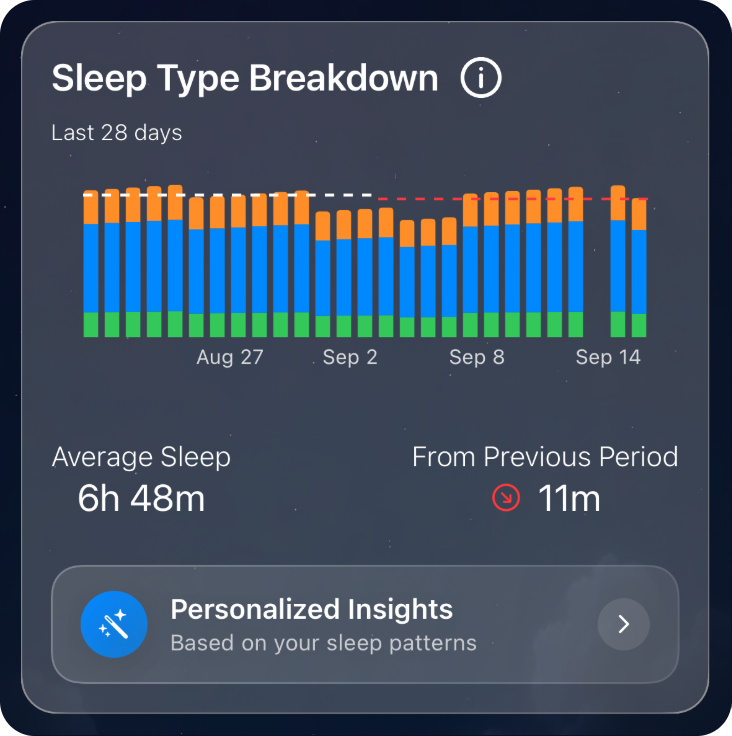
Sleep Type Breakdown stacks each night into deep, core and REM sleep, and compares your average with the fortnight before. When a hard week arrives the bars shrink, and you can see which nights fell short and which stages the lost time came from.
The debt that builds up
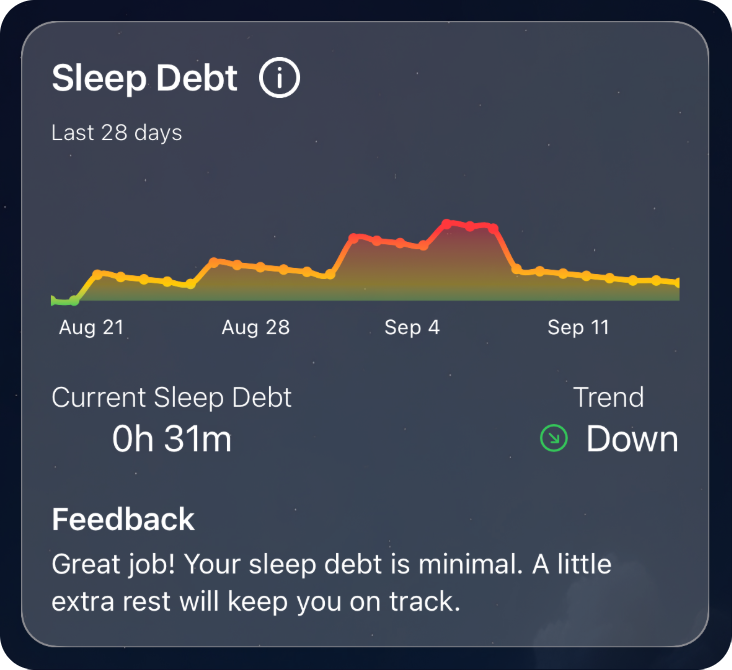
Sleep Debt keeps a running total of the difference between the sleep you need and the sleep you actually got. One short night barely moves it. A week of them shows up as a climb, and the line eases back down as you catch up.
Stress, night by night
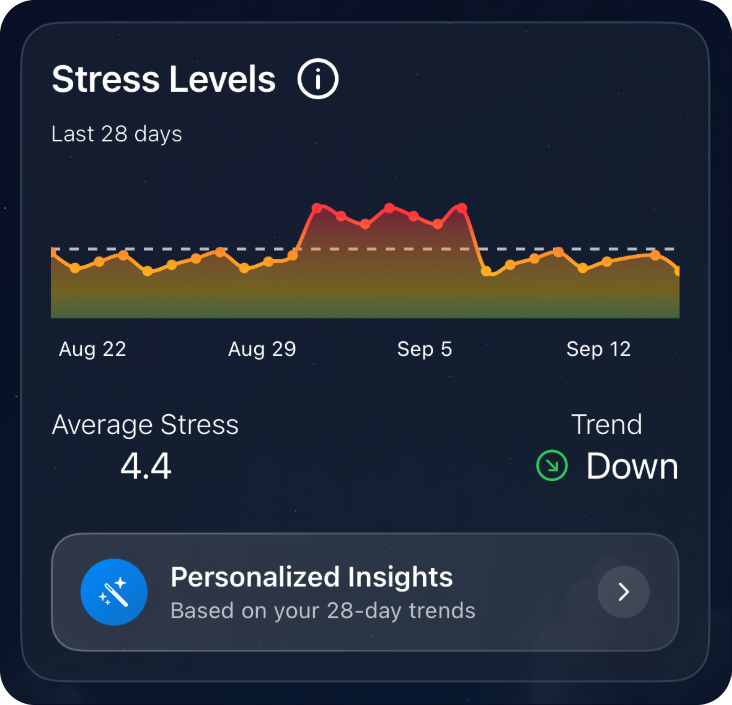
Stress Levels shows a nightly stress index worked out from your own sleep data and compared with your own baseline, along with the 28-day average and which way it is heading. In the example, the harder week stands out clearly from the nights around it.
Seen together, the three views make a link that is easy to feel and hard to prove from memory: the weeks when stress runs high are often the weeks when sleep runs short.
Nightmares are not the same as night terrors
It is worth ruling out a common mix-up. Nightmares are dreams you wake from and remember. Night terrors happen in deep sleep, the person does not fully wake, and they usually remember nothing. Here is how to tell the difference.
What the research shows
In its 2018 review of the evidence, the American Academy of Sleep Medicine recommended imagery rehearsal therapy for both nightmare disorder and PTSD-related nightmares, the only approach it rated that highly (Morgenthaler et al., 2018).
The idea is simple to describe: you rewrite the nightmare while you are awake and rehearse the new version. Here is how it works, and what the studies found.
Your nights, one at a time
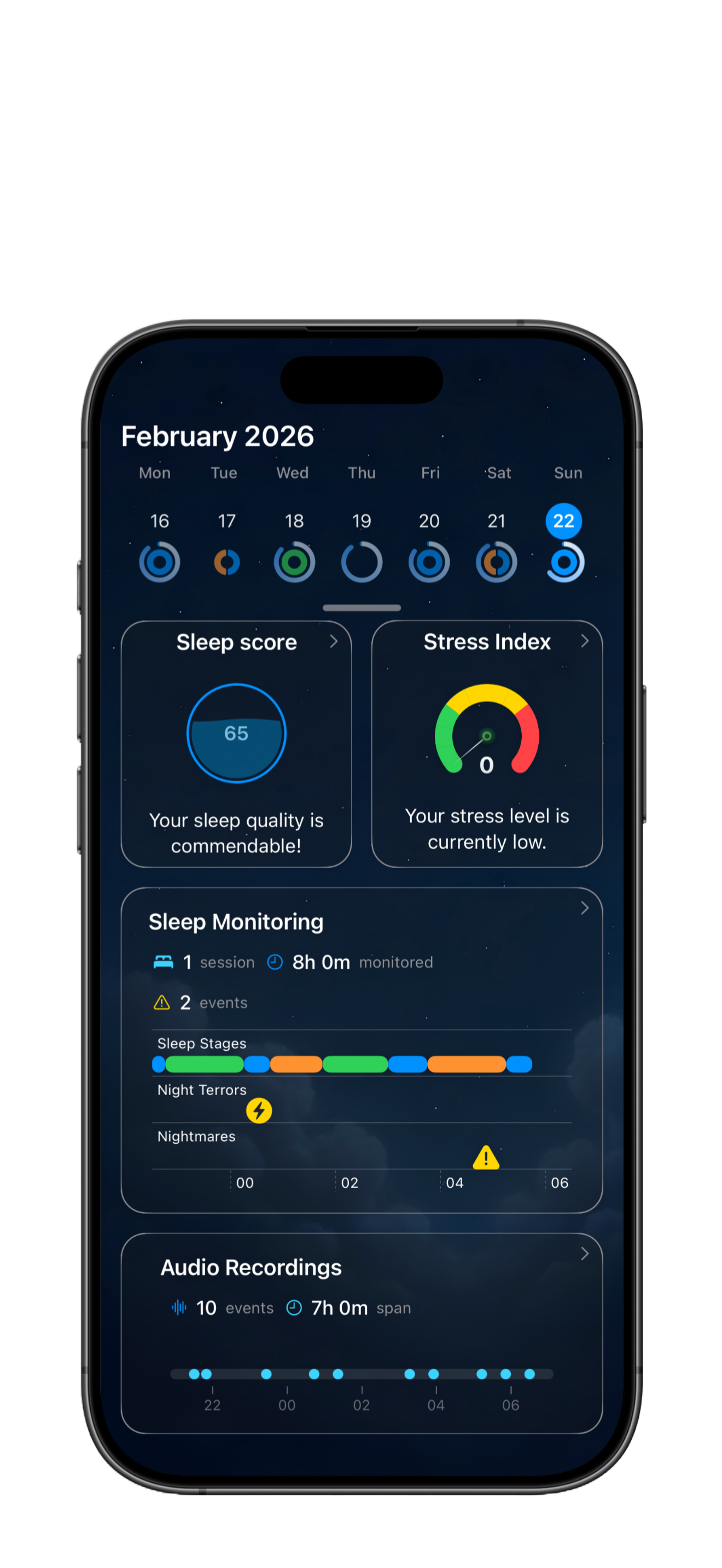
Trends show the shape of a month. The history view shows the nights inside it: each one with its sleep stages, every nightmare or night terror SleepSafe recorded and when it happened, and your own confirmation of each.
If you use audio monitoring, recordings of events are kept with the night they belong to.
Put together, the two answer the questions that are hardest to answer from memory: how often the nightmares really come, and whether things are getting better.
SleepSafe does not diagnose nightmare disorder. What it offers is a gentle response in the night, and an honest record of the nights themselves.
SleepSafe is a wellness app, not a medical device. It does not diagnose or treat any condition.
Common questions
- What counts as nightmare disorder?
- Repeated frightening, vivid dreams that cause significant distress or get in the way of daily life. How often they happen matters, but so does their impact.
- How common is nightmare disorder?
- The American Academy of Sleep Medicine estimates it affects about 4 percent of adults. Nightmares are far more common in people with PTSD.
- Are nightmares linked to poor sleep and stress?
- Yes. In a study of nearly 14,000 Finnish adults, insomnia and exhaustion were the strongest links to frequent nightmares. SleepSafe's Trends show sleep, sleep debt and stress side by side over 28 nights.
- Can an app diagnose nightmare disorder?
- No. SleepSafe is a wellness app, not a medical device. It keeps a record of your nights and responds gently when it detects a nightmare.