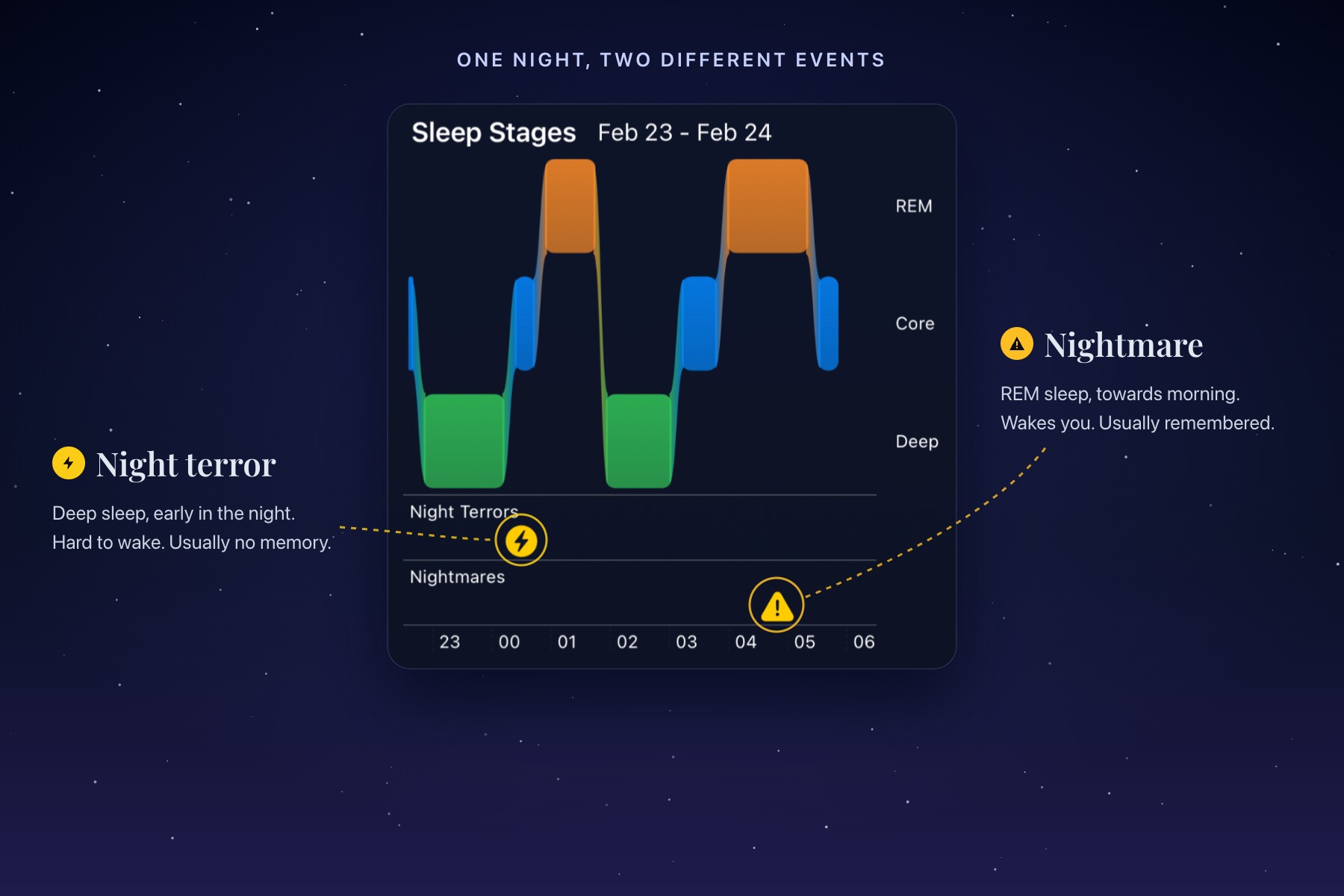
A SleepSafe sleep-stage timeline for one night, with a night terror marked early in deep sleep and a nightmare marked towards morning in REM sleep.
Someone in your home cries out in the night. By morning the question is the same: was that a nightmare, or a night terror?
The two words get used as if they mean the same thing. They do not. They come from different stages of sleep, they look different from the outside, and the right response to one can be the wrong response to the other.
The short version
A nightmare is a frightening dream that wakes you up, and you can remember it (NHS).
A night terror is an episode of intense fear during deep sleep. The person may scream, thrash or sit up with their eyes open, but they never fully wake, and in the morning they usually remember nothing (Cleveland Clinic).
Side by side
| Nightmare | Night terror | |
|---|---|---|
| Stage of sleep | REM (dreaming) sleep | Deep non-REM sleep |
| Time of night | Usually the second half | Usually the first part |
| Awake afterwards? | Yes, fully | No, only partly |
| Remembers it? | Usually, often in detail | Usually not |
| What you see | Wakes up scared, can talk | Screams, thrashes, eyes open |
| Who gets it | Children and adults | Mostly children aged 3 to 8 |
| What helps | Comfort once awake | Stay calm, keep them safe |
It comes down to the stage of sleep
Through the night, sleep moves in cycles between lighter sleep, deep sleep and REM sleep, the stage in which most vivid dreaming happens.
Nightmares belong to REM. They usually come in the second half of the night, when REM periods are longer, and they end with the dreamer awake, heart racing, often able to describe exactly what happened (Cleveland Clinic).
Night terrors belong to deep non-REM sleep, usually in the first part of the night. There is no story to remember because the person is not really dreaming. The body is caught between deep sleep and waking, and it reacts as if something is badly wrong (Cleveland Clinic).
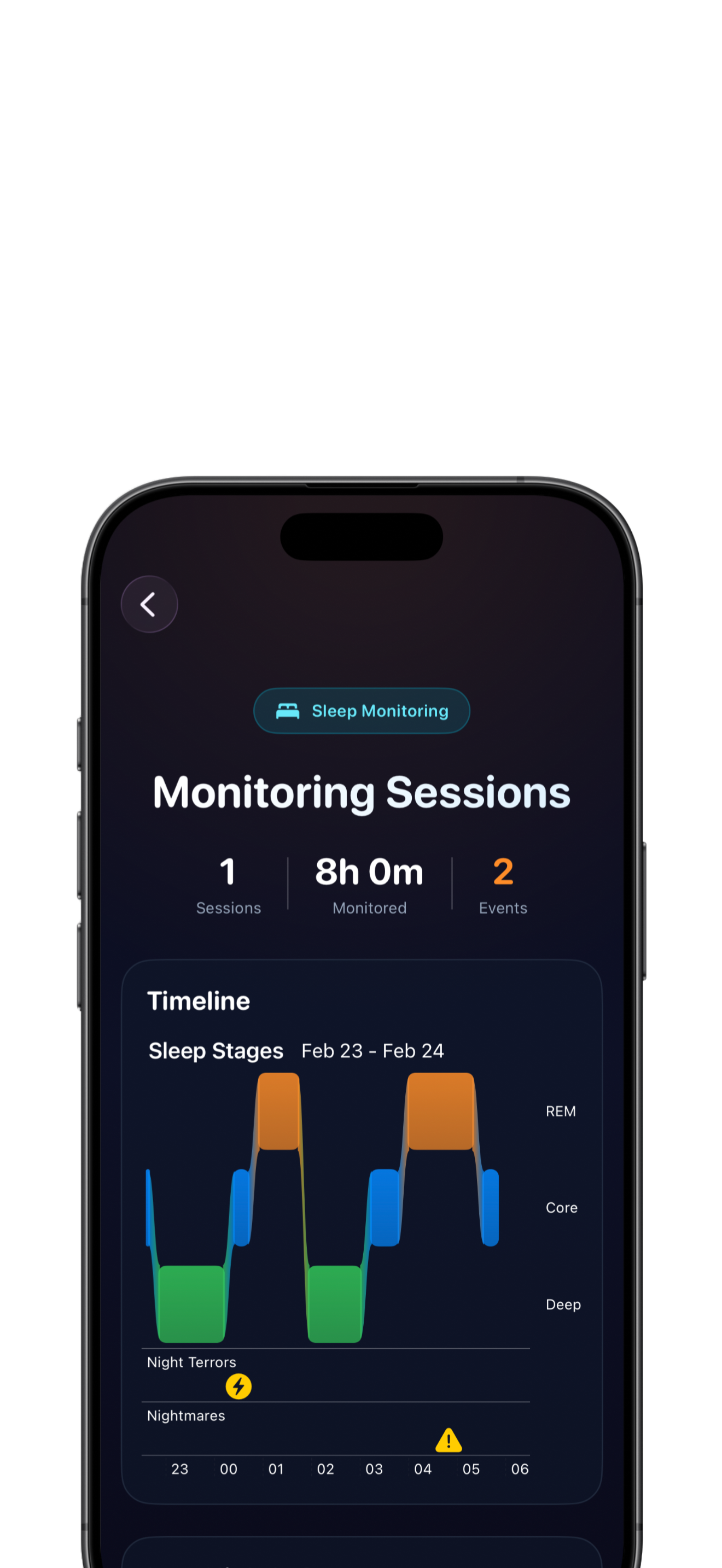
You can see the pattern in a single night. In the session above, SleepSafe marked a night terror early on, as the sleeper dropped into deep sleep, and a nightmare towards morning, during a stretch of REM.
What you see from the outside
After a nightmare, the person is awake. They may be shaken, but they know where they are, they recognise you, and they can be comforted.
During a night terror, the person can look awake without being awake. They may scream, sit bolt upright or try to get out of bed. They may not recognise you, and trying to comfort or wake them can make them more upset (NHS). A few minutes later they settle back into sleep as if nothing happened.
Who gets them
Both can happen at any age. Night terrors are most common in children aged 3 to 8 (NHS), but around 2 percent of adults report them too (Ohayon et al., 1999). Nightmares affect children and adults alike, and for some adults they become frequent enough to count as nightmare disorder.
Why the difference matters
Because the helpful response is almost opposite.
After a nightmare, the person is awake and wants reassurance. Light, a glass of water and a calm voice help. If the same nightmare keeps coming back, imagery rehearsal therapy is the best-studied approach.
During a night terror, you do not try to wake them. You stay calm, keep them safe, and wait. If the episodes come at a regular time, gently waking the sleeper shortly before that time each night is the approach with the most evidence behind it. Here is what to do during a night terror, step by step.
How SleepSafe tells them apart
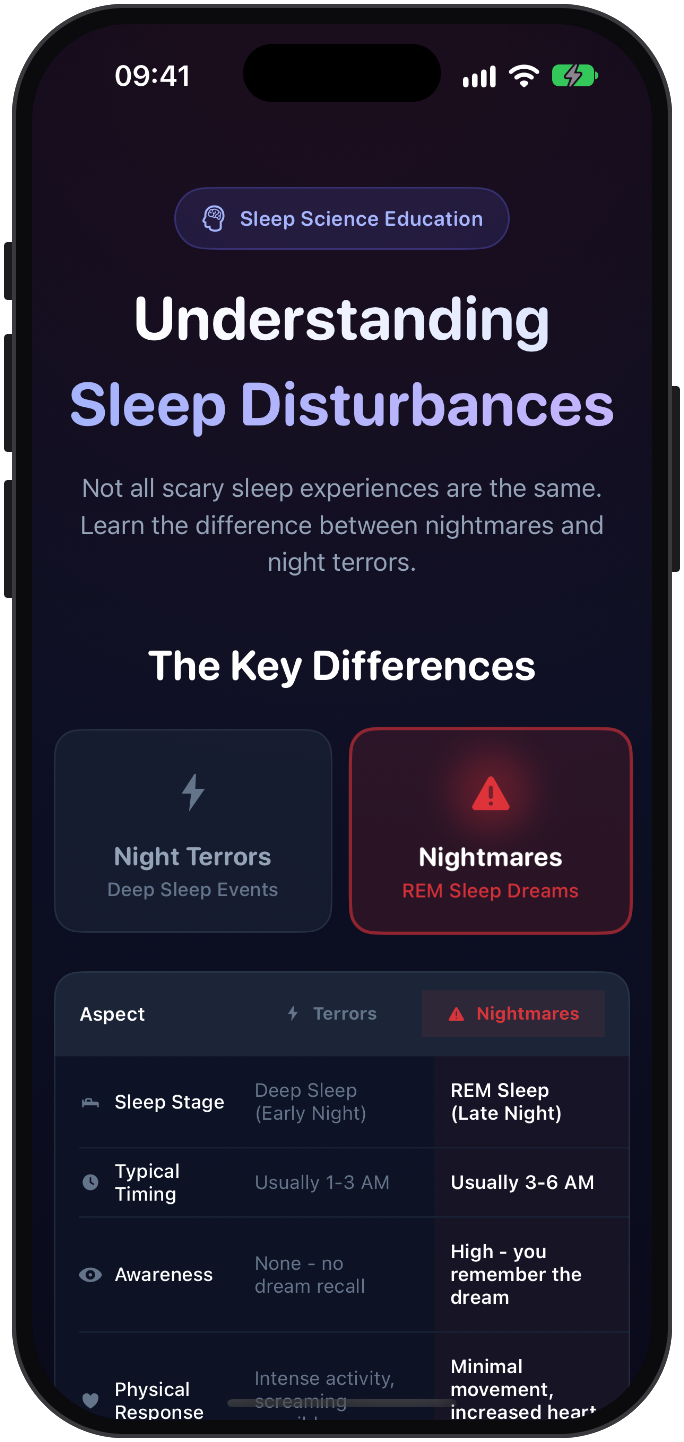
The same comparison lives inside the SleepSafe app, because knowing which one you are dealing with changes what to do about it.
SleepSafe records nightmares and night terrors as separate kinds of event. In the morning, each one appears with the time it happened and the stage of sleep it came from, so over a week or two you can see which pattern is really yours.
The two also get different kinds of help. For nightmares, the Apple Watch delivers gentle taps designed to ease the sleeper out of the dream. For night terrors that arrive at a predictable time, scheduled wake-ups rouse the sleeper briefly before the usual time, so the terror has less chance to start.
You choose what to watch for
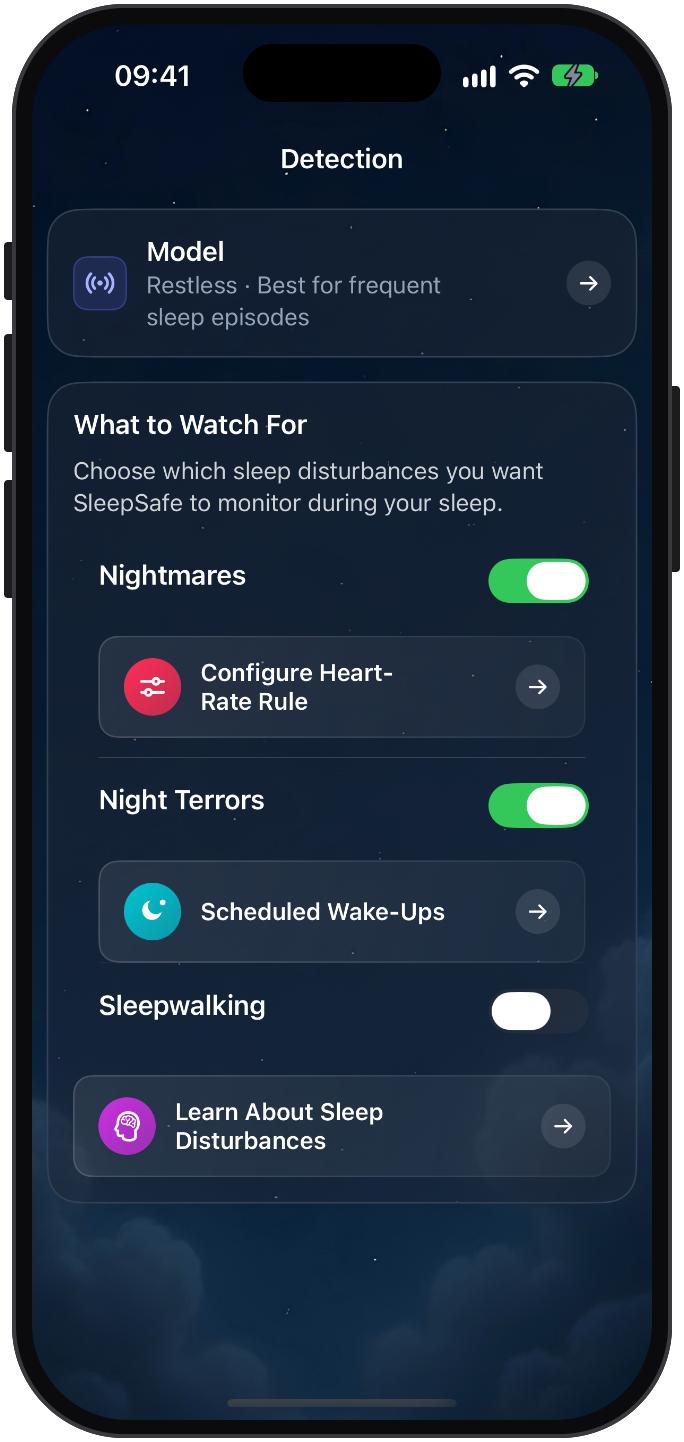
Not every household deals with both. In SleepSafe's detection settings, nightmares and night terrors each have their own switch, with the tools that belong to them sitting right underneath: a custom heart-rate rule for nightmares, and scheduled wake-ups for night terrors.
Sleepwalking has a switch of its own too, and a short guide in the app explains the differences if you are still not sure which one you are seeing.
SleepSafe is a wellness app, not a medical device. It does not diagnose or treat any condition.
Common questions
- What is the difference between a nightmare and a night terror?
- A nightmare is a frightening dream from REM sleep that wakes you, and you remember it. A night terror happens in deep non-REM sleep, the person does not fully wake, and they usually remember nothing.
- Should I wake someone having a night terror?
- No. They may not recognise you and can become more distressed. Keep them safe and wait for it to pass. After a nightmare the person is already awake, and comfort helps.
- What time of night do night terrors happen?
- Usually in the first part of the night, during deep non-REM sleep. Nightmares tend to come later, in the second half of the night, during REM sleep.
- Can adults have night terrors?
- Yes. They are most common in children aged 3 to 8, but around 2 percent of adults report them.